Wildland fire Smoke is becoming more and more common in Southwest Colorado
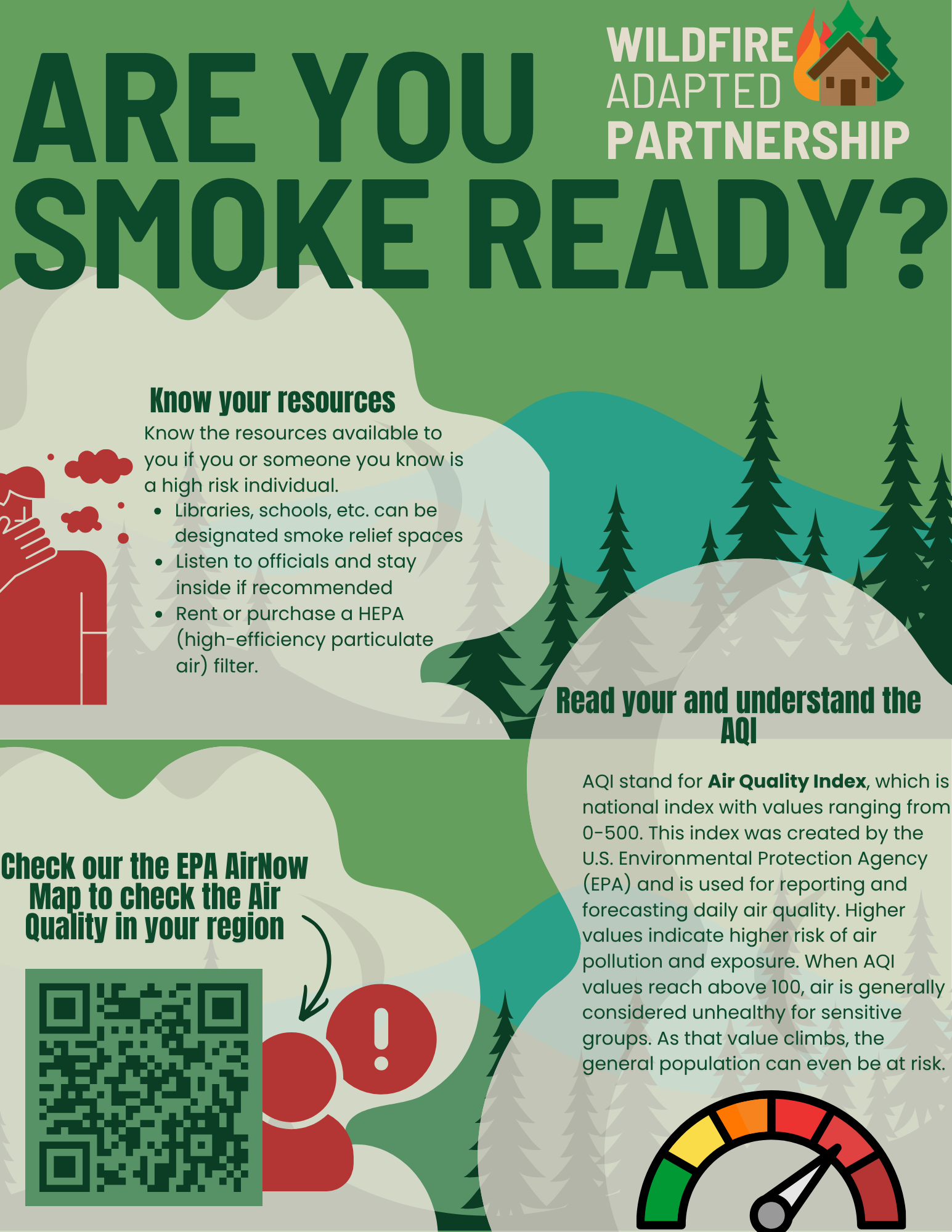
Are you smoke ready?
What does it mean to be Smoke Ready? Staying informed and knowing what to do during smoke events is key.
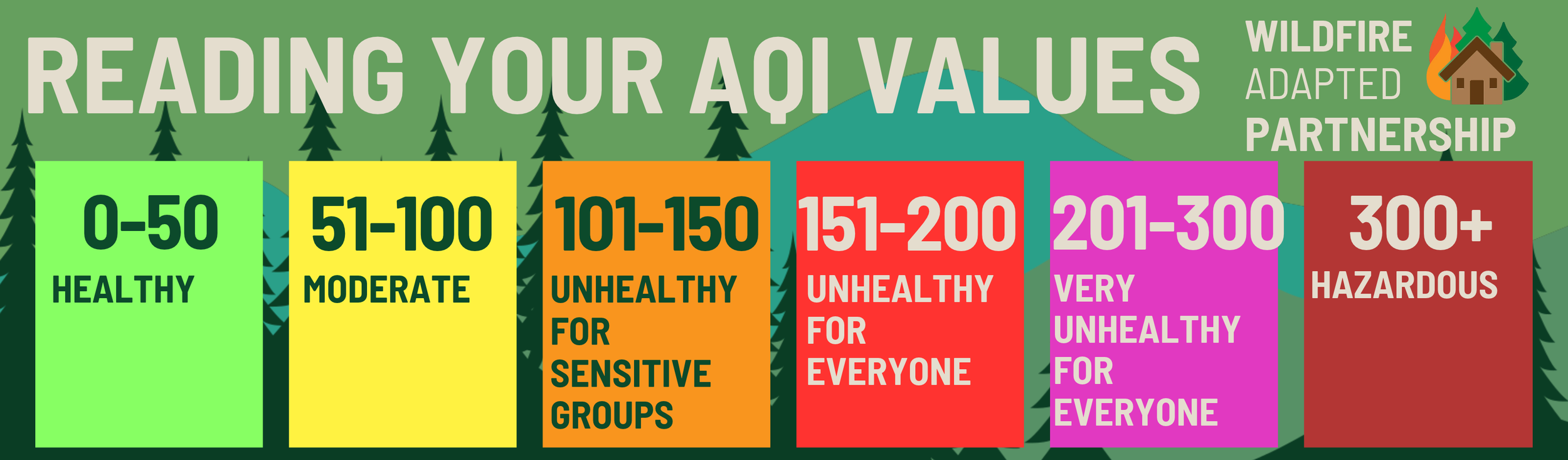
What is AQI and how do I read it?
AQI stands for Air Quality Index, which is national index created by the Environmental Protection Agency with values ranging from 0-500. It is used for reporting and forecasting daily air quality. Higher values indicate higher risk of air pollution and exposure. When AQI values reach above 100, air is generally considered unhealthy for some sensitive groups. As that value climbs, the general population can even be at risk.
← Check out your Real Time AQI closest to you in southwest Colorado
Southwest Colorado Air Quality
Current U.S. Air Quality Index (AQI)
Pagosa Springs
Durango
Mancos
Silverton
All smoke can have adverse health effects, but it’s important to remember the differences between these types of smoke events.
Prescribed fire plans created by local, state, and federal officials must meet specific air quality requirements designed to limit smoke exposure to nearby communities. Officials will only implement their burn plan under very specific and safe conditions. Prescribed burning is usually planned for wetter/mild conditions, while wildfire smoke is often being produced during fire season, when conditions may be hot, dry, and windy.
Not only this, but prescribed burning is often more controlled by the amounts of fuels that can burn (organic materials on the landscape). Wildfires can engulf non-organic materials, such as structures and building materials, which can release different air pollutants.
Check out your local fire protection district for more information about prescribed burns happening in your area. Apps like WatchDuty and IncidiWeb can also share where prescribed burning may be happening in your area.
University of Nevada extension office compares it like this: If prescribed fire smoke were equivalent to lighting a match, then wildfire smoke would be like lighting a bonfire.
Prescribed Fire vs. Wildfire Smoke
What are the first actions to take?
Reduce outdoor smoke exposure during poor air quality events. Consider wearing a mask if the AQI is 100+
Stay inside during poor air quality events. Keep doors and windows closed when inside and turn air conditioning to “recirculate”. Upgrade your furnace filter. Use a filter with a MERV 13 rating or higher. Ask an HVAC professional what type of high-efficiency filter is compatible with your system.
If your home does not have air filters, seek out public, climate controlled buildings such as libraries
Do not add to indoor air pollution. Try not to burn candles, gas/propane stoves, fireplaces, or aerosol sprays
-
![]()
Wildfire Adapted Partnership Printable Flyer for Neighborhoods
-
![]()
Understanding the AQI Matrix
-
![]()
SWCO Air
-
![]()
Retail Demand Forecasting